New Zealand has declared that, there at least, Covid is over. In Australia, Covid is in its final throes (we hope). During her time in lockdown, Kim Pick, executive creative director of VMLY&R New Zealand volunteered to add to The Stable’s series, by exploring its poser, “what made it great?”
 Kim Pick
Here’s what she has concluded:
WHAT MADE IT GREAT
It’s driven some to madness, to suicide, to drugs and to drink, that question, “What made it great?”
Is there a formula to great ideas, and magnificent, original work? Is it luck? Is it genius? Is it me? How do you create it? Recreate it?
Writers, artists and musicians have destroyed themselves in pursuit of greatness. They create something truly great: beautiful, brilliant, perfectly formed, acclaimed, elusive, fleeting…. But then they are charged with making it great again and again. On command, and on demand. To deadline, and to budget, and to the rising expectations of critics and audiences and fans. With their reputation, and the fortunes of CEOs, investors and clients riding on it.
Studies have shown creative people to have a rate of depression and suicide over eight to ten times the general population.
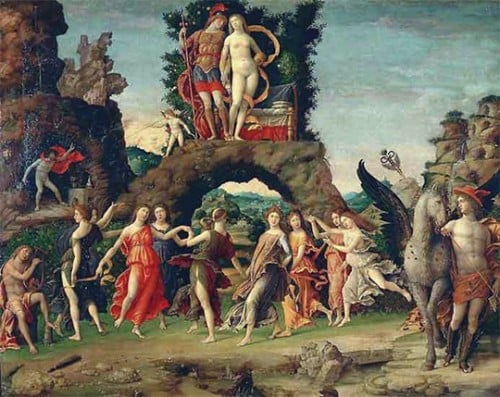
But it wasn’t always that way. Historically, in Western society, greatness was attributed to the Muses. If you were patient and lucky, the Muses would visit you, and gift you the divine fire of inspiration. Clio, the Muse of fame. Or Calliope the Muse of eloquence, who was said to have inspired Homer to write the Illiad and the Odyssey…
But today’s thinking? If it’s great, or if it’s not, well, that’s on you. 1% inspiration, 99% perspiration…
Neuroscientist, Nancy C. Andreasen, spent over a decade figuring out what went into creating something great.
She was interested in how magnificent and highly original works were created, and where the great ideas came from. Not just the good ideas, but truly great ones that had the ability to make “our lives, our society, and our civilization richer and more beautiful”.
A researcher into schizophrenia at the University of Iowa, she was one of the first to investigate how the creative mind worked, with a particular interest in whether there was an element of ‘madness’ in creativity.
So, she forensically studied great work, and the brains and the methodology of artists and writers and musicians who made it, to figure out what made it great.
Were their brains different? Was there a common formula or technique they used? Was giftedness or mental illness involved?
She concluded that, “The essence of creativity is making connections and solving puzzles…”
And that, “Creative people are better at recognising relationships, making associations and connections, and seeing things in an original way – seeing things that others cannot see.”
And that, “When eureka moments occur, they tend to be precipitated by long periods of preparation and incubation, and to strike when the mind is relaxed.”
The great ideas came as “flashes of insight” or “moments of inspiration” – not by actively focusing on the task, but by going into a relaxed mental state “where ideas float, soar, collide and connect”.
A state, like flow, which allowed their unconscious mind to make connections.
And these great ideas happened, not in the office, or the boardroom, or even while they were trying to put the pieces of a puzzle together, but while they were effectively off-duty, often in the shower, or in the bath, walking or driving, resting or daydreaming.
No coincidence then, that Archimedes was lounging in the bathtub when he had his eureka moment and discovered mass…
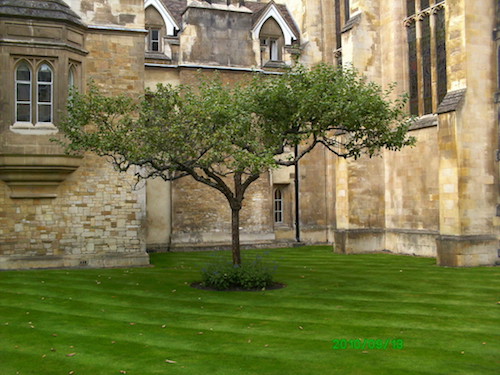
Or that Newton was lazing under an apple tree when he discovered gravity…
What made it great, it seems, was being curious and open to lots of diverse information, opinions, insights and stimulus, letting it all sink in to cross-pollenate and percolate, and then walking away from it, to find time to rest and allow the unconscious mind to make connections.
So how can we create the space for eureka moments today?
Well, maybe recent events will have helped do that for us.
If Covid-19 lockdown was a time of enforced quiet and introspection, of solitary walking, and resting and daydreaming, then, by all accounts, eureka moments are next, and we are in for a period of great creativity.
If the 2020s are a time of paradigm shifts and an explosion of ideas, then looking back, we might say, “ah, that’s what made it great.”
You might also like