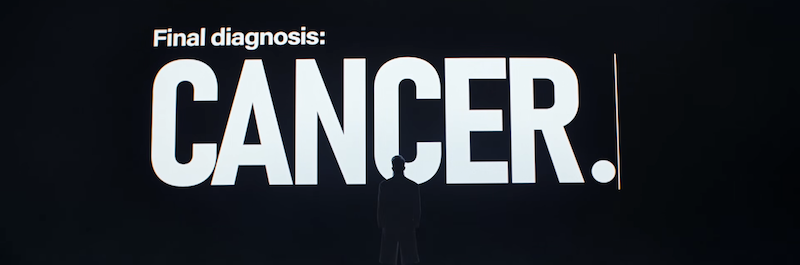
Most medical causes are asking for the same thing, money to find better treatments or cures. Many causes use the same tactic, shock, to get the money they need. Nearly all causes have the same problem, tiny budgets to do the job.
But look at how JWT used the three cause advertising standards to create an ad for Parkinson’s NSW, whose appeal you never see coming and won’t forget for a very long while.
The Stable talked to Simon Langley, executive creative director of J.Walter Thompson Sydney and Clare Audet, marketing director, Parkinson’s NSW, about cutting through the clutter of cause advertising.
The Stable: Simon, cause advertising is very popular. Is adland saturating the market, making it harder to get through?
Simon Langley: For sure, cause advertising has become very popular, especially in the lead up to a certain awards festival in the South of France. Parkinson’s however was a campaign very close to our heart. A good friend of mine has Parkinson’s, and he introduced us to Parkinson’s NSW to help them raise donations to help researchers to find a cure. This friend of mine was also the director of The Lucky Ones, and we are very proud of what we’ve achieved together.
TS: What do you think are essential ingredients for effective cause advertising?
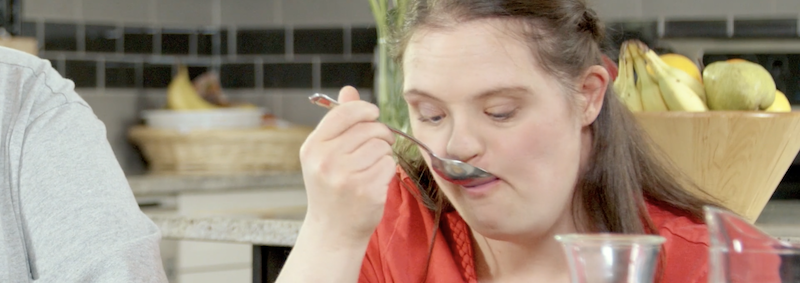
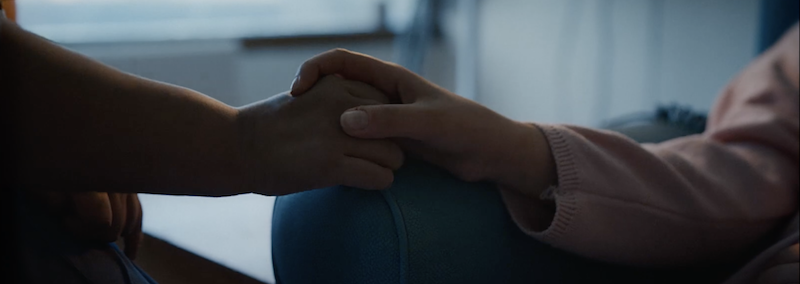
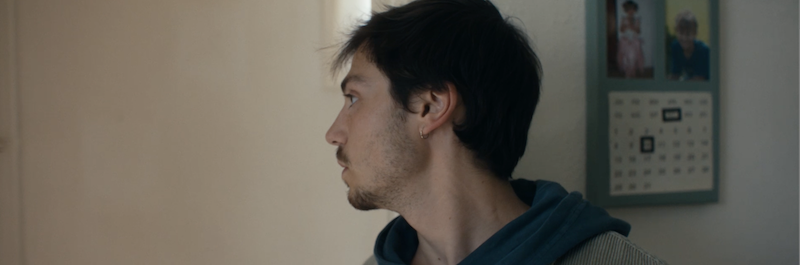
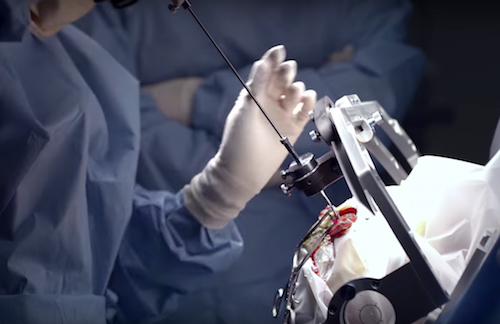
SL: It has to resonate on an emotional level and make you feel something. If it doesn’t connect, why would you act? Our film is simple. We show what someone is willing to go through to get relief from this debilitating disease. But if this is the best treatment we currently have, we need donations to help find a cure. I think this film communicates that loud and clear.

TS: Clare, what are the biggest challenges you face right now?
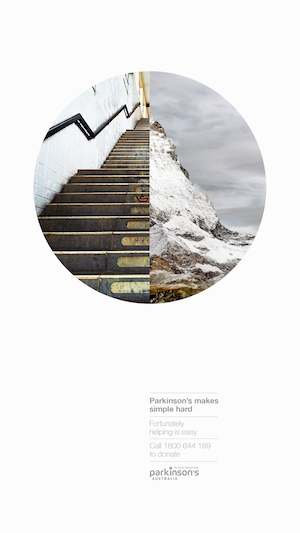
Clare Audet: As we receive minimal government funding (less than $1 for each person with Parkinson’s), most of our challenges are related to ensuring we have enough money to continue to operate and provide our free support services. I’d say our top three challenges right now are creating new income streams, overcoming apathy about Parkinson’s symptoms amongst the general public and improving our processes and systems to gain greater economies of scale.
TS: What are the biggest communications/message challenges you face?
CA: There are always sensitivities to consider when crafting messages about any health charity, but for Parkinson’s NSW our biggest challenge is finding the balance between being provocative to get cut-through whilst portraying a positive message about living with the disease. It’s a constant compromise. Do we craft messages to the public about some of the devastating, life-altering symptoms to get them to sit up and take action and donate or do we show positive stories about how people with Parkinson’s are still leading positive lives? I think JWT got the tone right with our Lucky Ones campaign but it’s a constant challenge.
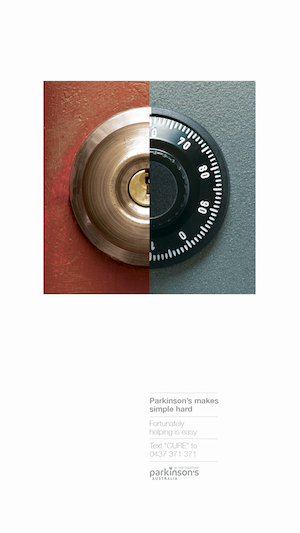
TS: Simon, where did the idea for the Parkinson’s campaign come from?
SL: This campaign is a great example of the fact an idea can come from anywhere. Our young in-house editor/director had the germ of the idea, and together with other senior members of the team we shaped it into the film we eventually produced. We needed a campaign that made people look at Parkinson’s in a different light, and not just as a disease that gives you the shakes.
TS: What decisions led you to choose TV?
SL: We wanted something shareable, something that would cut through the charity fatigue. The idea was brutally simple, and film was the best, and most powerful way to bring it to life.
TS: Brands played a huge part – and did very well – at D&AD in Creativity for Good. Judge, Richard Bullock said, “I was reviewing conceptual design ideas, innovations, social behaviour change, movements…things that were so much bigger and more complex than a show about ads for good causes. It was much deeper than that.” Do charities/NFPs need to up their game?
SL: Charities and NFPs create some of the most powerful campaigns out there. Just look at Parkinson’s and the Ice Bucket Challenge as examples. These are campaigns created on minimal budgets, the agency has had to think of a big – and effective – idea that can be implemented within a tight budget constraint but will still sell a powerful message. For this reason, I think more often than not cause campaigns are award winning campaigns.
TS: What cause campaigns (globally) in the last few years have had a particular impact on you?
SL: Our very own I Touch Myself project which launched on the anniversary of Divinyls lead singer Chrissy Amphlett’s death from breast cancer. It was a very powerful and unexpected behaviour change campaign encouraging women to touch themselves and detect cancer early.
I also admire the Ice Bucket Challenge for the sheer scale and impact it had globally, raising awareness (and importantly donations) for a disease many people didn’t even have on their radar.
Extra content from The Lucky Ones included the Director’s Story:
and one family’s story, A Shaky Useless Fellow:
Read the other stories in our cause advertising series:
Cause Advertising: It’s all good, isn’t it? PART 1: Interview with J.Walter Thompson & MQFF
Cause Advertising: It’s all good, isn’t it? Part 2. Interview with Barnardos and Ikon
Cause advertising: It’s all good, isn’t it? Part 3. Ogilvy Sydney & NBCF